When I go to the theatre, I love a good story. Something that catches me and involves me right away, and keeps me involved and interested through out. Along with keeping me interested, if it makes me think and introduces me to new ideas and concepts - even better. To paraphrase the Bard himself, "the script is the thing..."
Hapgood by Tom Stoppard is exactly such a script. It is currently being performed at Nimbus Theatre by Six Elements Theater. In my limited experience with Stoppard, I know that he writes dense scripts - usually combining philosophy, science, mathematics with a love story, or historical drama, or even Shakespeare. In the case of Hapgood, he combines a great, thrilling spy story with physics. How? Well, take my advice and go see this show. The opening scene is worth the price of admission itself, and the remainder of the show does not falter or disappoint. Russian spys in Britain during the Cold War - can you ask for more?
The script is solid, the acting was fantastic and it is truly a very enjoyable evening in the theatre, as well as one that will keep you on the edge of your seats. The cast is great with consistent Russian and British accents through out. The story moves quickly, even though it is a talky work (like most Stoppard). I sat in the back row and there were a few times that I had trouble hearing some actors, but I was leaning forward in my chair far more because I was truly intrigued by what was happening, and involved.
What also caught my attention was the scenic design. The show opens in a pool changing room with showers on one side, changing stalls with doors, two entrances, and a sink at the front. Following scenes took place at the zoo, the shooting range, an office space, and an apartment. These are a LOT of locations, yet each one was realistic. On a big budget, this would be easily down with fly space and lots of off-stage space. Nimbus doesn't have that. The design was similar to those flashy metallic cubes that are connected at the center so you can keep opening it up and it changes, but stays the same. After the opening scene, the changing stalls come apart, and are turned around to create walls, the shower curtains fold against the wall, and suddenly the set is totally different. It was a brilliant design that was simple, yet totally versatile. With each scene change needing a bit more time, they were covered by some great 60's spy-movie style music, along with a stagehand/actress making sure everything was where it should be, then putting hand to ear as if listening to orders from someone off-stage. It was a really good idea. The other thing that kept the scene changes fluid is that actors from the new scene would enter while the change was happening, and begin playing in the space - putting flowers in a vase, straightening files, etc. Fantastic way to keep the audience involved in what was happening.
If you want a good theatre experience, go see this show. So smart and thrilling - twists and turns through out. Delicious.
Sunday, April 26, 2015
Friday, April 24, 2015
Ten Tips for Your Post-Show Discussion (from your audience member)
![]() |
| Pillsbury House + Theater Breaking Ice Series |
I LOVE a good post-show discussion. I love that it gives the audience members an opportunity to share the effect that the show had on them, and the questions they may have about the work and how it was created and performed. I always appreciate the investment in time that the company is willing to give to discussions like these--it shows a lovely generosity of spirit and willingness to actively engage.
A few theaters stand out for me for their consistently engaging, thoughtful post-show discussions: Pillsbury House Theater (such as their recent Death Tax discussions that focused on various aspects of the health care system), Penumbra Theatre (always engaging and thoughtful), Theater Latte Da (especially in the Next: New Musicals in the Making series and even the Guthrie Theater (where else could you chat with Mark Rylance and Tony Kushner?).
![]() |
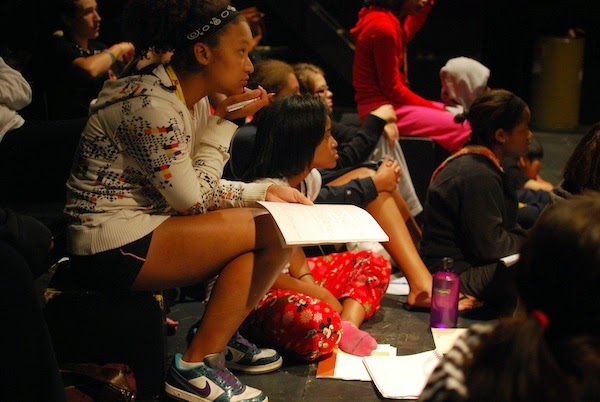
| Students listen to live discussions about Penumbra Signature plays. Photo by Asha Shofner |
Having said that, I'd like to present my dream list of what I, as an audience member, love to see in a post-show discussion.
1) It's All In The Timing.
Give audience members who aren't interested in participating time to exit the theater, but not too much time. Wait too long to get the discussion started and you may lose engaged audience members who are tired of waiting.
2) Who Are You Again?
Introduce everyone who is participating in the discussion (on the theater side). Facilitators, company members, creative team, everybody. Please give us your full names and your role in the company or discussion. You may think we all know you, or don't care who you are, but we do. Knowing who is speaking lends much needed context to the discussion.
3) Why Are We Here?
What is the intent behind your post-show discussion? Are you looking for compliments and comments? Do you want something deeper to help you mold and shape your production? Do you want to give audience members an opportunity to process what they saw and provide insight? How about providing insight into your process? Let us know the purpose of the post-show discussion, so we can do our part effectively. We want to be useful!
4) A Gentle Start.
Occasionally, post-show discussions start with the facilitator simply asking for comments about the play. It can be hard for audience members to throw out their opinions immediately without having some sense of where the discussion is leading. Also, sometimes it takes us a bit of time to process what we're feeling and thinking and feel comfortable sharing. I love a discussion that starts with a little background from the company about the show and the creative process. It seems to spark effective discussion.
5) Speak Up!
It's true that theater audiences are aging. If you have a microphone, use it. If you don't, repeat questions or statements that audience members say so everyone can hear it. You can do it! You've got those lovely classically-trained voices. (That said, I personally hate in any setting when someone in the last row complains they can't hear. Move up, man!) It's nice to encourage people to come to the front rows for the discussion--even shy and retiring theatergoers.
6) Get Involved.
It doesn't hurt to make sure that your facilitator is prepared to lead the discussion totally on their own. Sometimes an audience just isn't responsive, or aren't prepared to discuss what we just saw. But they're interested! That's why they are staying for the discussion. Also, if you've gotten the entire cast to stay for the discussion, make sure they are involved as well. Often, it's just director and writer talking about the process. We love to hear from the actors as well.
7) Actively Listen.
I understand there's a school of discussion that involves just listening to comments without responding in any way. I find this baffling and frustrating. Responding and building off comments and questions is the work of excellent facilitators and helps the discussion feel like more of a two-way street. Even if a question or comment is out of left field or unproductive (see number 8), it's nice to make sure the member knows that their comment was heard (see numbers 5 and 10).
8) Don't Be Delicate.
"Now for my favorite part of the show....What does that say? Talk to the audience! Ugghhh, this is always death..." -- Krusty the Clown, The Simpsons: I Love Lisa (4.15)You've invited the audience for a discussion and you are directly inviting their comments. Try not to be too sensitive. You may not hear what you want to hear and you may get unexpected criticism but try to accept the comments with grace and an open heart.
I know! It's easy for me to say that. I didn't put my heart and soul and hours and hours of my time into creating a theatrical work only to have people criticize some tiny point about it. But remember, these people not only paid to come to your show, they are interested enough to stay afterwards and engage with you in a discussion. They mean well. (Usually.)
9) Keep It Short.
Your audience has already invested a few hours in your theater, and has voluntarily offered to stay even longer. Everyone wants to feel that they are using their time productively. Letting the discussion drag on past a productive point is hard not only for us, but for your company. We want their time to be used effectively as well. If you keep the discussion short, you will leave us wanting more and pursuing these conversations in our own lives (and encouraging our friends and family to come to your show! Bonus!)
10) Appreciate It.
Nothing wrong with a few thank yous--on both sides. If, as audience members, we've been terribly moved by a production (I'm thinking specifically of These Old Shoes at Transatlantic Love Affair), it's wonderful to have the opportunity to thank the company for their work and give them some props. And we like to be thanked too, for our comments and time. We love feeling that we've contributed in some way (apart from the time, money and attention that we've already willingly and joyfully invested.)
So once more ... on behalf of your audience members, thank you to all the theaters who invest time, energy, passion and thought in these post-show discussions. Thank you for including us and giving us the opportunity to make theater a two-way street.
![]() |
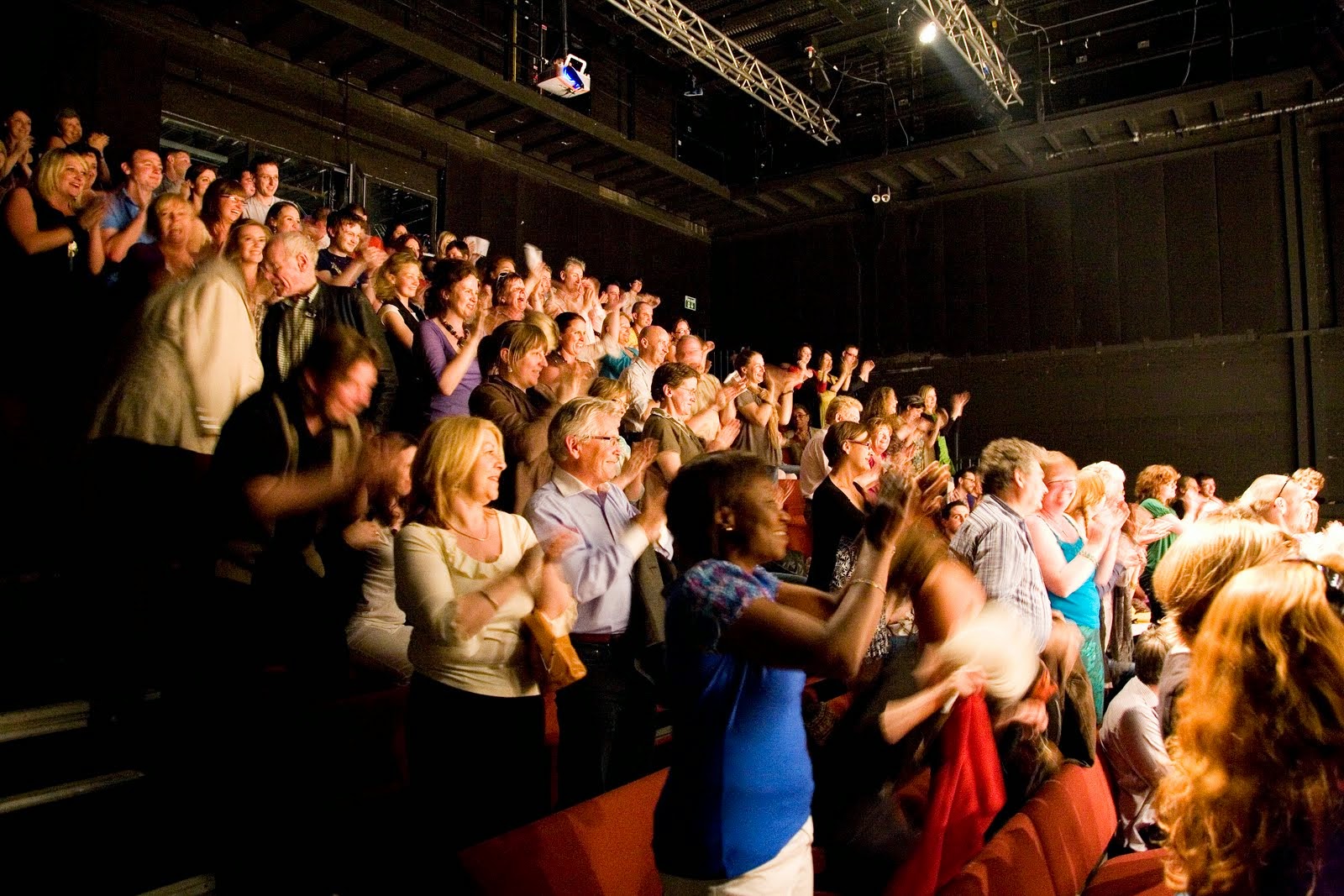
| Image from http://www.sparkmovie.net/standing-ovation/ |
Tuesday, April 14, 2015
Carousel at Lyric Opera: A Master Class in Preshow Buzz
When Lyric Opera of Chicago announced months ago that they would be presenting Rodgers and Hammerstein's Carousel starring Steven Pasquale (April 10 through May 3), that was it.
I've loved Pasquale since seeing him in 2002 in A Man of No Importance at Lincoln Center on my very first trip to NYC. BTW, if you've not listened to him sing "The Streets of Dublin" for a while, I highly recommend it.
So we were in. Bought the tickets, figured out travel and lodging. No way were they doing this show with this cast in the Midwest and we were missing it.
In the interim, more cast has been announced and every one a gem. I mean, look at this cast: Laura Osnes, Jenn Gambatese, Matthew Hydzik, Denyce Graves (loved her in Doubt at Minnesota Opera), Jarrod Emick (loved him in The Full Monty in London and The Boy from Oz),Charlotte D'Amboise (just saw her in Pippin), and Tony Roberts (saw him in Xanadu, but love him from Annie Hall).
Anyway, as the big day approaches, Lyric Opera is offering amazing teaser videos and content that is ramping up excitement to previously unforeseen levels. Here's a taste:
Promotional video. Warning: Just a touch spoilery ... (insert wink at spoilers for a musical written in 1945):
Then, of course, here's the cast urging you to come and see the show, which appears to be a bit heavy on the beards:
Not excited yet? Try Lyric Opera's Insider's Guide to Carousel, which includes behind the scenes videos with director Rob Ashford, behind the music with conductor David Chase, Q and As with the cast, and of course, Eight Reasons to Love our Carousel stars.
You can even access the program online and read the cast bios and various articles to your heart's content.
Also, check out their great social media postings. I mean how cute is this:
I would have loved to have had this kind of information at my fingertips, not to mention accessibility to insider knowledge from the creative and cast via social media, not to mention a communication with other theater lovers across the country. It's such a different world, but I love it. What a remarkable age this is! It's a real fine clambake, that's for sure.
I've loved Pasquale since seeing him in 2002 in A Man of No Importance at Lincoln Center on my very first trip to NYC. BTW, if you've not listened to him sing "The Streets of Dublin" for a while, I highly recommend it.
So we were in. Bought the tickets, figured out travel and lodging. No way were they doing this show with this cast in the Midwest and we were missing it.
In the interim, more cast has been announced and every one a gem. I mean, look at this cast: Laura Osnes, Jenn Gambatese, Matthew Hydzik, Denyce Graves (loved her in Doubt at Minnesota Opera), Jarrod Emick (loved him in The Full Monty in London and The Boy from Oz),Charlotte D'Amboise (just saw her in Pippin), and Tony Roberts (saw him in Xanadu, but love him from Annie Hall).
Anyway, as the big day approaches, Lyric Opera is offering amazing teaser videos and content that is ramping up excitement to previously unforeseen levels. Here's a taste:
Promotional video. Warning: Just a touch spoilery ... (insert wink at spoilers for a musical written in 1945):
Then, of course, here's the cast urging you to come and see the show, which appears to be a bit heavy on the beards:
Not excited yet? Try Lyric Opera's Insider's Guide to Carousel, which includes behind the scenes videos with director Rob Ashford, behind the music with conductor David Chase, Q and As with the cast, and of course, Eight Reasons to Love our Carousel stars.
You can even access the program online and read the cast bios and various articles to your heart's content.
Also, check out their great social media postings. I mean how cute is this:
And then there's this. You know, whatever! Maybe that might make you want to see the show. Not me, I'm in cause I love great musical theater, of course.
![]() |
| Photo by Todd Rosenberg |
A theatery digression: I think about how much I loved Hairspray, my very first Broadway show, and how I looked and looked for information about the show. I think I may have bought magazines off Ebay that had articles about it! I researched it using online databases at my library!
I would have loved to have had this kind of information at my fingertips, not to mention accessibility to insider knowledge from the creative and cast via social media, not to mention a communication with other theater lovers across the country. It's such a different world, but I love it. What a remarkable age this is! It's a real fine clambake, that's for sure.
Friday, April 10, 2015
The Debutante's Ball and Ethnic Heritage: Father and Daughter Weigh In
Please enjoy this guest post by my friend Jay and his teen daughter Juno about what Mu Performing Arts/History Theatre's play The Debutante's Ball means to them:
The thin Good Friday crowd of History Theater regulars and
supporters blended comfortably with Filipino families, easily identified by
their uproarious laughter during the targeted ethnic insider jokes. Though not
provocative, the overall atmosphere reminded me poignantly of feeling like a
square peg in a round hole, gently but not painfully reconciling mutually
strange foods, accents, and jokes with my parents' white Minnesotan friends at
70s and 80s dinner tables, the place settings slightly outdated, the humor
never dead-on, but ample.
Jay: As a first generation Filipino immigrant raised outside
the Minnesota Filipino community, and largely isolated from Filipino
traditions, I was thrilled to discover Eric "Pogi" Sumangil's comic
documentary on preserving ethnic heritage.
Without being overly sentimental,
the play still managed to evoke my sympathy for the young characters struggling
to define their own racial identity. I laughed with and never-quite-pitied the character
I saw the most of myself in, an awkward and geekish young man who played the
Harana (Filipino serenade) for the female protagonist. I would have liked to
explore the theme of "nisei" having an "ethnic" channel to
direct universal themes of teenage awkwardness, and how they often make an
asset of innate bi(or greater)-culturism.
| Image by Elizabeth Flores, Star Tribune |
Juno: When I found out that we were going to see this
play, I was a little hesitant. I haven't ever been immersed in the culture, and honestly, I had no idea what to
expect. Sure, I identify as part Filipino, but I was sure that every reference
or joke would go right over my head - I was wrong. I didn't need to speak
Tagalog, I didn't have to go to social gatherings, I didn't even have to do
anything but sit and watch. I was able to laugh and enjoy it as it happened,
and so was everyone else in the Theater.
I think what was most appealing to me was that it didn't
beat around the bush about anything. Yes, Filipino's are blunt, touchy, and
ambiguously ethnic, and there isn't a point in the show where you don't see
that. Instead of being a play about trying to fit in with the crowd, it's a
play about being comfortable with who you are, even if you look or act
differently than the people around you. It wasn't a crazy
assimilation-promotion play, it was
straight forward, and documented (accurately) what it's like to grow up
Filipino-American in Minnesota.
Sunday, April 5, 2015
The World Goes 'Round at the Jungle: Race, Revues and Reverb

Waiting in the Jungle Theater lobby for the house to open at The World Goes 'Round*, I overheard two patrons discussing changes in the local theater scene, including Sarah Bellamy's becoming the artistic director at Penumbra Theatre. And this is what they said: "She's so light-skinned--you'd never guess she was ... (slightly lower tones) African-American." Really.
Issues of race and racial equity are in the forefront of every sphere of life and culture right now. MPR's Marianne Combs recently hosted a fascinating discussion with Randy Reyes of Mu Performing Arts, Toni Pierce-Sands of TU Dance, and C. Michael-jon Pease of Park Square Theatre about the future of diversity (racial and cultural) in Minnesota arts and how to bring people of color into theater audiences. Ten Thousand Things Theater's Ambassador Program works specifically to bring in audiences of color to their paid shows.
With issues like this in mind, I tend to scan theater audiences for their demographic make-up and seeing how well people of color are represented in the audience. As many audiences at shows I attend are primarily older, and pretty darn white, I love to see an audience with representation across the board. For example, I was so pleased by how racially (and age) diverse the audience was at The Color Purple at Park Square Theatre. #Representation rocks.
And representation rocks not only in the audience, but on stage as well. One of the reasons it was so great to see a racially diverse audience at The Color Purple was that the stage was filled with fabulous actors of diverse racial backgrounds. There's something about an all-white audience viewing a show made up of actors of color (particularly singing) that smacks of white privilege and makes me uncomfortable. What can I say? These issues are challenging, sensitive and very personal.
The World Goes 'Round (at the Jungle Theater now through May 24), a revue of the songs of John Kander and Fred Ebb, was conceived by Scott Ellis, Susan Stroman and David Thompson and originally performed in the early 1990s.
It's hard to look at the Jungle's production of this show, which is a revue and contains material from twenty-six years of musical collaboration, and not see any representation by actors (or musicians) of color. The band is made up of seven white men, and the cast of three men and four women is uniformly white.
(Side note: I just fell down an internet rabbit hole while looking up race-blind/color-blind casting. Several hours later, I'm back. Whew. Be sure to look into August Wilson's thoughts on the matter.)
There's nothing wrong with an all-white cast, but when so many perceived barriers to non-traditional casting involve the 'jarring departure from reality' of casting siblings of different races or casting actors of color in positions of power in historical times, shouldn't a revue be easy to cast with at least a little non-traditionality? I'm hoping Lin-Manuel Miranda's critically praised and wildly successful musical Hamilton, in New York now and transferring soon to Broadway, will help pound a nail in the coffin of those arguments to diverse casting.
Can we also talk about revues? Many revues create a narrative that creates a framework for the songs (such as the wonderful I Love a Piano, staged in 1996 at the Ordway Center), some simply group the songs by theme or era. Chris Caggiano of Everything I Know I Learned on Broadway expresses the challenges of the revue beautifully in his review of Ten Cents a Dance:
The songbook revue is both the easiest and the hardest type of theatrical show to pull off. "Easiest" because you seemingly just throw together a bunch of songs and let the audience revel in waves of nostalgia. "Hardest" because, if you don't want the audience tuning out after the first few numbers, you need to come up with some kind of through line or production concept to hold people's attention.Yes. And a revue plucks the song from its context in its musical and asks the performers to sell a story through that song. If you'd like to see the revue done beautifully, don't miss the Broadway Songbook series at the Ordway. Hosted by James A. Rocco and written by James A. Rocco and Jeffrey P. Scott, the Songbook focuses on a songwriting team, an era or a particular style. Featuring a revolving cast of talented performers (including performers of color), the cast sells the hell out of the songs. Next up is Broadway Songbook: Rock & Roll on Broadway (April 17-18). With their great affection for the genre and amazing performers, these shows are necessary viewing for any musical theater fan.
But back to the show at hand ...
I've listened to the 1991 Original Cast recording of And the World Goes Round (which features five actors including Karen Ziemba, Jim Walton, and Brenda Pressley--who happens to be an actor of color), and despite the best intentions and talent, I don't think it's a very successful show. Starting with an overwrought "The World Goes 'Round" from New York, New York, moving on to a frenetic "Coffee in a Cardboard Cup" from 70, Girls, 70, this revue maintains an exhausting heightened emotional state. It's all hills and no valleys. The new arrangement of "Cabaret" (think Manhattan Transfer on the Lawrence Welk Show) and the closing version of "New York, New York" (sung in a number of languages) just don't work for me.
With all this said, the cast of the Jungle Theater production performed gamely and with great commitment. They worked hard to sell the songs, and I wish the show had served them better, particularly Bradley Greenwald (impeccable as always) and Emily Rose Skinner (a great comedienne who made the most of the intimacy of the Jungle).
But there's no way around this: the show is way too loud. The on-stage band is miked, the performers have both body mikes and handheld mikes (with obvious sweetening), and it is LOUD. The sound, combined with the unnerving tendency for the performers to aim over the audience's head to balconies that don't actually exist, made me feel that the show was staged for a much larger venue. (Say, Bloomington Civic Theater?) One of the things that I have always loved best about the Jungle is its warm intimacy, and it's a shame to be blasted out of that lovely space.
I wonder if the loudness of the show (and the revue format) contributed to one of the strangest experiences I've had in the theater. After each number, audience members (a few--let's not get crazy) whistled shrilly (as if they were at a rock concert), and if a cast member did some sort of move, there was woooooooo-ing. It was really odd, and perhaps contributed to the actors' energy and intensity being turned up to eleven. Possibly twelve.
* So what's the actual title? The program reads "And the World Goes Round", while the website lists the show as "The World Goes 'Round." According to Peter Filichia at MTI, the surviving creators prefer the latter, and that's how MTI licenses it. So that's what I'm calling it!
Thursday, April 2, 2015
Drawn to Fruit Fly
They had me at the title: I love my gay male friends and appreciate the unique qualities of our relationships. I don't know how I missed the previous iterations, but I was not going to let the newest version of Fruit Fly pass me by!
The show is the brainchild of Sheena Janson and Max Wojtanowicz, I've appreciated each of them on stage separately, including Sheena's touching Desiree in the Mu Performing Arts production of A Little Night Music and Max in the Nautilus Music-Theater production of Ordinary Days. In addition to being talented in their own rights, the pair have been friends for a lifetime, and they built this show around the framework of their friendship.
The simple set on the Illusion Theater stage includes a large whiteboard, on which is written the progression of the show, a guide to the jokes and references in the show, and a space in the upper left corner marked "Sondheim References." With that, they already had me charmed. Most musical theater has its fair share of Sondheim references, so I loved to see them addressing it so directly!
Max and Sheena start the show amid a squabble that clearly illustrates their beyond-comfortable relationship. They are witty and charming, and so are the songs, with music by Michael Gruber that occasionally evokes Sondheim, especially when the singers are racing through their snappy, wordy, and funny lyrics. And yes, there were a few humumumumumable melodies. (And if you get that reference, this show's for you.)
From members of the children's chorus in a production of Joseph and the Amazing Technicolor Dreamcoat and on through high school and college, their friendship grows, hitting a few bumps along the way but seeming to thrive as they live their adult lives. Of course, there is a crisis, and it's a biggie. When one of the pair gets involved in a serious romantic relationship, the other feels left behind. This part of the show went on a bit too long for me, though it was so well performed that it's amazing that they willingly relive such a traumatic breakdown. (Also, it's not exactly suspenseful. If they hadn't stayed friends, we wouldn't be watching the show, right?)
Overall, it was a delightful 90 minutes (no intermission--get your box wine before the show) of laughter, a few tears and a lot more laughter. I think anyone will see their own long-term friendships reflected onstage, as the joys and strains are universal, while still being wonderfully unique to Sheena and Max.
For more info, there are some cute introductory videos posted to the Fruit Fly event page on Facebook, where you can also get info about two special performances featuring a boxed wine tasting on Friday, April 3 and a fruity drink tasting on Friday, April 11.
If you fall in love with Sheena and Max in this show (and you will, unless you already love them), you can catch more of their work at the monthly cabaret they created and host on the first Monday of each month at Hell's Kitchen. Musical Mondays is a fun night for seeing theater people from all over the Cities performing musical theater songs in a variety of themes, It's the closest we have here in Minnesota to NYC's fabulous 54 Below, and it is a can't-miss event if you love musical theater,
The show is the brainchild of Sheena Janson and Max Wojtanowicz, I've appreciated each of them on stage separately, including Sheena's touching Desiree in the Mu Performing Arts production of A Little Night Music and Max in the Nautilus Music-Theater production of Ordinary Days. In addition to being talented in their own rights, the pair have been friends for a lifetime, and they built this show around the framework of their friendship.
The simple set on the Illusion Theater stage includes a large whiteboard, on which is written the progression of the show, a guide to the jokes and references in the show, and a space in the upper left corner marked "Sondheim References." With that, they already had me charmed. Most musical theater has its fair share of Sondheim references, so I loved to see them addressing it so directly!
Max and Sheena start the show amid a squabble that clearly illustrates their beyond-comfortable relationship. They are witty and charming, and so are the songs, with music by Michael Gruber that occasionally evokes Sondheim, especially when the singers are racing through their snappy, wordy, and funny lyrics. And yes, there were a few humumumumumable melodies. (And if you get that reference, this show's for you.)
From members of the children's chorus in a production of Joseph and the Amazing Technicolor Dreamcoat and on through high school and college, their friendship grows, hitting a few bumps along the way but seeming to thrive as they live their adult lives. Of course, there is a crisis, and it's a biggie. When one of the pair gets involved in a serious romantic relationship, the other feels left behind. This part of the show went on a bit too long for me, though it was so well performed that it's amazing that they willingly relive such a traumatic breakdown. (Also, it's not exactly suspenseful. If they hadn't stayed friends, we wouldn't be watching the show, right?)
![]() |
| See the Sondheim References on the board? And doesn't Sheena look great in yellow? Photo: Lauren B Photography |
Overall, it was a delightful 90 minutes (no intermission--get your box wine before the show) of laughter, a few tears and a lot more laughter. I think anyone will see their own long-term friendships reflected onstage, as the joys and strains are universal, while still being wonderfully unique to Sheena and Max.
For more info, there are some cute introductory videos posted to the Fruit Fly event page on Facebook, where you can also get info about two special performances featuring a boxed wine tasting on Friday, April 3 and a fruity drink tasting on Friday, April 11.
If you fall in love with Sheena and Max in this show (and you will, unless you already love them), you can catch more of their work at the monthly cabaret they created and host on the first Monday of each month at Hell's Kitchen. Musical Mondays is a fun night for seeing theater people from all over the Cities performing musical theater songs in a variety of themes, It's the closest we have here in Minnesota to NYC's fabulous 54 Below, and it is a can't-miss event if you love musical theater,
Wednesday, April 1, 2015
Boeing Boeing at Torch Theater
If you're looking for flat-out slapstick fun, don't miss Torch Theater's production of Boeing Boeing at the Minneapolis Theatre Garage. A welcome breath of spring and fun, it's winding up all too soon (runs through April 4th).
Written by Marc Camoletti in the mid-60s and directed by Craig Johnson, Boeing Boeing is about a smooth player (Sam Landman) who juggles three air hostesses (Rachel Finch, Stacia Rice and Sara Richardson) with the help of his airline timetables, his naive hometown friend (Zach Curtis), and his imperious maid (Mo Perry). Naturally, romantic mix-ups, luggage mishaps, pratfalls and slamming doors abound. A flop on Broadway when it premiered in the 1960s, a revival in 2008 won Mark Rylance (recently seen here in the Guthrie's Nice Fish) a Tony for his portrayal as the player's friend.
Now, back to that performance ...
I don't know what on earth Sara Richardson (as Gretchen) is doing, or how she does it. She's so completely absurd and over-the-top, but completely sincere and committed at the same time. The physicality with which she expressed her character was both repressed and contained, but at the same time wildly expressive. Combine this physicality with her German accent and manner of speech, and a very flippy wig and the results were just incredibly hilarious. It's one of those performances you can't describe--you just have to see it. Her most indelible performance for me was in Pillsbury House Theatre's Buzzer (premiered here, but now in NYC at the Public)--it's amazing to think it's the same person, (I know it's what actors do, but I love to see such range.)
| Image by Thomas Sandelands - Star Tribune |
The entire cast is just as committed to the slapstick and the comedy in this piece. Sam Landsman is wonderfully smooth, a lovely contrast to the somewhat grotesque character he played in Sexy Librarian, (Note to self: use caution when Googling that title.) Zach Curtis throws himself so fully into his character and his pratfalls that if he makes it through the run unscathed, I'd be surprised. Stacia Rice had me from the moment she entered and threw her bag against the door--her exaggerated Italian accent and affectations were hilarious. Mo Perry is always delightful and hilarious, but I would have liked to see her character go a bit smaller in contrast with the rest of the proceedings. (I know, it's a farce. Small doesn't come into it!) The glasses that she wore also hid her wonderfully expressive face.
Speaking of costuming, the clothes were gorgeous. The air hostesses wore the heck out of their capes and their smart little dresses--not to mention the vintage flight bags. The pre-show samba-ish music set the stage beautifully for the show to come.
All in all, it's a completely delightful show, and the audience was wholeheartedly engaged and laughing like crazy. The woman next to us kept slapping her leg and saying, "Oh, no!" in an adorable way. It's a lovely little trip to the swinging 60s.
Total Tangent: After the show, I couldn't get "Swinging Nordwest", the kicky song that Jim Lichtschiedl used in his show Knock! (with Theater Latte Da) out of my head. It just seemed to fit in so perfectly with the aesthetic. Also, when the show was recently on Broadway, they worked with Kathleen Marshall to choreograph a curtain call dance (inspired by Rylance's work with the Globe and their dancing curtain calls). Very charming!
| Image by Thomas Sandelands - Star Tribune |
Speaking of costuming, the clothes were gorgeous. The air hostesses wore the heck out of their capes and their smart little dresses--not to mention the vintage flight bags. The pre-show samba-ish music set the stage beautifully for the show to come.
All in all, it's a completely delightful show, and the audience was wholeheartedly engaged and laughing like crazy. The woman next to us kept slapping her leg and saying, "Oh, no!" in an adorable way. It's a lovely little trip to the swinging 60s.
Total Tangent: After the show, I couldn't get "Swinging Nordwest", the kicky song that Jim Lichtschiedl used in his show Knock! (with Theater Latte Da) out of my head. It just seemed to fit in so perfectly with the aesthetic. Also, when the show was recently on Broadway, they worked with Kathleen Marshall to choreograph a curtain call dance (inspired by Rylance's work with the Globe and their dancing curtain calls). Very charming!
Subscribe to:
Posts (Atom)